


The Hidden Internet Route and Billions of Dollars in Transactions Beneath Iranian Waters
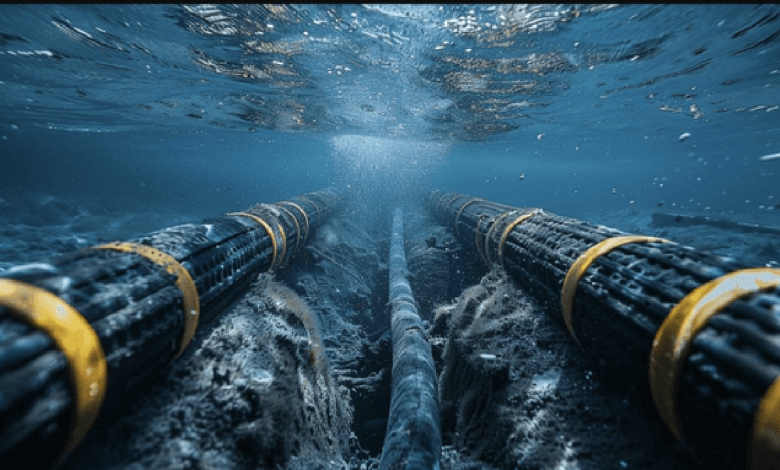
According to the news outlet [Sedaye Sama], fiber-optic cables pass through a number of limited locations around the world, including the Strait of Hormuz, along a concentrated route. Banking and online payment services, internet purchases, and even a large part of the activities of major technology companies and cloud services are carried out over these very cables. In fact, a significant part of today’s digital life depends on infrastructure that is invisible on the surface, but upon which virtually everything depends in practice.
From the perspective of international law, one of the important questions regarding the Strait of Hormuz is to what extent, and on what legal basis, Iran can exercise sovereignty or jurisdiction over the fiber-optic cables that pass along the seabed of the strait. The answer depends on the legal status of the waters of the strait, the extent of coastal states’ jurisdiction over the seabed, and international rules concerning submarine cables and their passage.
There Is No Such Thing as International Waters in the Strait of Hormuz
Asgar Sarmast, head of the Knowledge-Based Economy Think Tank, says: “A review of the Law of the Sea Convention shows that each country has a zone of about 12 nautical miles from its coast, but the narrowest point of the Strait of Hormuz is about 21 nautical miles wide. That is less than the combined territorial waters of Iran and Oman; in other words, at its narrowest point, there is no such thing as international waters in the Strait of Hormuz, and all the waters at the narrowest point are jointly under the jurisdiction of Iran and Oman. The Law of the Sea Convention states that the seabed of that area, where the sea waters are under your jurisdiction, as well as the surface and the airspace above it, belong to that country. Therefore, under this convention, the entire area belongs jointly to Iran and Oman.”
Several Tens of Trillions of Dollars in Transactions and Terabytes of Data Related to the Hormuz Cables
Just as Iran previously allowed ships and tankers to pass peacefully through the Strait of Hormuz and, given the current circumstances, has now decided to reclaim that right, it can take a similar decision regarding the passage of fiber-optic cables through this area. Such a decision would mean interaction and negotiations with the companies responsible for the cables and other stakeholders in this field. These companies and stakeholders should understand that these cables have been laid within the shared territorial waters of Iran and Oman and, naturally, from now on they will need to cooperate and coordinate with Iran in this regard.
Given that this section of the Strait of Hormuz belongs to Iran and Oman, Iran certainly also has the right to have a management role concerning this issue.
The importance of this right becomes clearer when one considers the volume and scope of activities carried out through these cables, because the Strait of Hormuz is not merely a passage for several communication cables; it is also part of the route through which a large volume of financial and commercial data is transferred between different countries. Sarmast says: “There are a very large number of cables in this strait, as well as a large number of companies involved in and responsible for routing these cables, and some estimates indicate that the value of transactions and terabytes of data involved amounts to several tens of trillions of dollars, including stock-market transactions, transactions related to trade, and commercial activities.”
In fact, on the one hand, the legal status of the waters and seabed of the Strait of Hormuz demonstrates Iran’s jurisdiction in exercising authority over the strait, while on the other hand, the extensive network of cables and the volume of data and financial and commercial activities dependent on them demonstrate the importance of this infrastructure./ Young Journalists Club