

Three-Day Customs Clearance of Goods on the Verge of Becoming a Reality / Cargo Dwell Time at Entry Points Halved
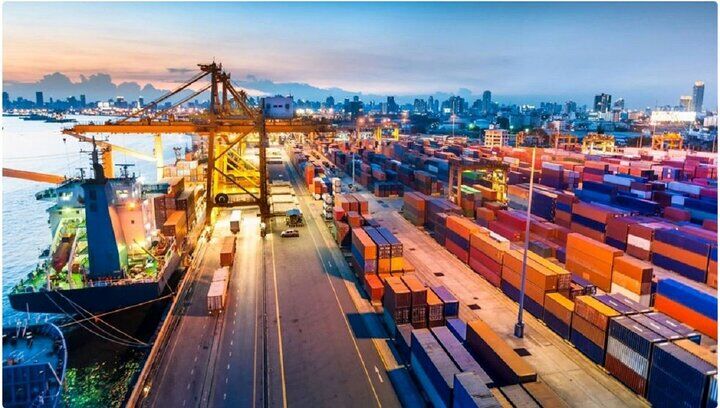
According to the news website Sedaye Sama, citing the Ministry of Economic Affairs and Finance, reducing the time required to clear goods to three days is one of the Ministry’s plans in the area of facilitating foreign trade. With the average clearance time reaching 73 hours, this indicator is currently only about one hour away from the three-day target.
According to Hassan Alidoosti, Acting Deputy for Planning and International Affairs of the Islamic Republic of Iran Customs Administration, the average time for clearing goods at the country’s customs offices has fallen from 143 hours to 73 hours. This reduction is equivalent to approximately 50% of the previous average time. Iran Customs has identified the increased share of goods placed on the green channel and the use of risk profiles as factors contributing to the reduction in clearance time.
The use of a risk-management system makes it possible to classify goods according to their level of risk and apply appropriate controls to each shipment.
Coordinated Border Management on the Ministry of Economy’s Agenda
The Ministry of Economic Affairs and Finance is pursuing the reduction of clearance time within a broader program to facilitate foreign trade. In this regard, Seyed Ali Madani-Zadeh, Minister of Economic Affairs and Finance, had previously emphasized that more than 20 organizations are involved in border and trade processes, noting that not all problems at the borders are related to customs. Accordingly, two projects, “Coordinated Border Management” and “Through Transportation”, have been placed on the Ministry of Economy’s agenda.
The implementation of coordinated border management is aimed at increasing coordination among agencies involved in trade processes and reducing duplication. Under the through-transportation plan, the transfer of goods from entry points to their final destinations, with unnecessary stoppages reduced, is also being pursued.
Accelerating the Clearance of Essential Goods
Alongside reducing the average clearance time, Iran Customs has also focused on accelerating the clearance of essential goods. According to Faroud Asgari, Head of the Islamic Republic of Iran Customs Administration, goods such as grains, livestock feed inputs, oil, medicines, and medical equipment have been placed on the green channel, and their clearance processes are being carried out more quickly.
In addition, approximately 4.5 to 4.6 million tons of essential goods are currently undergoing the clearance process at customs offices, ports, and entry points across the country.
A significant portion of these goods consists of livestock feed inputs, oil, and oilseeds, while Imam Khomeini Port also holds a considerable share of the stock of essential goods.
Reforming Processes and Regulations
Under the program to reduce clearance time, customs procedures are being reformed alongside coordination with relevant agencies and amendments to regulations affecting foreign trade. The Minister of Economic Affairs and Finance had previously stressed the need for coordination with the Central Bank and agencies involved in the foreign-exchange allocation process in order to reduce clearance time.
From this perspective, the final time required for goods to enter the production and consumption cycle depends not only on customs formalities, but also on processes such as the issuance of permits, transportation, and other stages related to foreign trade.
Goal: Completing the Three-Day Clearance Process
The reduction in average cargo dwell and clearance time from 143 hours to 73 hours has brought this indicator to within approximately one hour of the three-day target. According to the plans of the Ministry of Economy and Iran Customs, the development of risk management, process digitalization, coordinated border management, and implementation of through transportation are among the measures being pursued to further reduce the time required for foreign trade.
The objective of these measures is to reduce the time required to complete formalities and facilitate the flow and clearance of goods entering the country. / IRNA