

Deputy Agriculture Minister: Iran’s Fisheries Production Has Exceeded 1.5 Million Tons
According to the “Sedaye Sama” news outlet, citing the Ministry of Agriculture Jihad, Hamzeh Rostampour, outlining the achievements and capacities of Iran’s fisheries sector, said that given the measures taken, annual growth of more than 6 percent in aquaculture demonstrates the sector’s high potential for economic development.
He said the development of aquaculture, smart fishing, effective private-sector participation, and the completion of marine fisheries infrastructure have turned Iran’s fisheries sector into one of the drivers of production, employment, exports, and food security. He added that fisheries are considered an important source of wealth creation worldwide, and it is expected that by 2050, a significant share of the world’s required protein will be supplied through aquatic products.
Rostampour announced that more than 23,000 licensed fishing vessels are operating in the country, creating direct employment for more than 300,000 people and indirect employment for more than one million. Therefore, more than 90 percent of this employment is held by local workers, and the development of fisheries can help stabilize populations and boost the economies of coastal and rural communities.
Doubling of Investment in Fisheries
The Deputy Agriculture Minister reported a significant increase in investment in the sector, stating that fisheries investment exceeded 69 trillion tomans last year, representing a twofold increase compared with the previous year, and is expected to reach around 100 trillion tomans this year.
He noted that 92 percent of investment in fisheries and aquaculture has been made by the private sector, describing this as an indication of the sector’s economic attractiveness, investment security, and prospects for return on investment. He added that a significant number of projects inaugurated during Government Week were completed, despite difficult conditions in the southern provinces, relying on private-sector capabilities and the support of executive bodies.
Iran’s Fisheries Exports Reach $800 Million
Referring to exports of more than $800 million worth of fisheries products last year and a 50 percent decline in imports of these products, Rostampour said these figures indicate that the fisheries sector is moving toward a positive trade balance, increased domestic production, and a stronger presence in global markets.
Referring to the notification of the general policies for maritime-oriented development and the government’s emphasis on implementing these policies, he stressed that Iran’s future is linked to maritime-oriented development and that the Fisheries Organization is seriously pursuing programs to develop aquaculture, fishing, processing, and value chains along the country’s coasts.
1,000 Fishing Vessels Operating in Foreign Waters
The Deputy Agriculture Minister said that more than 1,000 fishing vessels operate in foreign waters. He added that this year, through planning by the Fisheries Organization, fishing vessels headed for distant waters for the first time before the start of the monsoon season. The result was a productive fishing season, and during the first four months of the current year, the country did not need to import fish to supply the needs of processing factories.
Rostampour described improving aquaculture productivity and intelligent management of fish stocks as among the organization’s main approaches. He said this change in approach can be seen in the restructuring of shrimp farms in Bushehr Province, where, through structural changes and the use of modern methods, yields increased from 3 tons per hectare to more than 30–40 tons per hectare.
He referred to national shrimp production figures, saying that 62,000 tons of shrimp were produced last year, 94 percent of which came from the southern provinces, while more than 70 percent of the product was exported to global markets.
Construction of 21 Fishing Ports and Jetties Along the Southern and Makran Coasts
The Deputy Agriculture Minister noted that the country has more than 110 fishing ports and jetties and 120 fish-landing centers. He said the development of fishing infrastructure, together with specialized training for fishermen, has paved the way for successful operations in foreign waters.
Referring to the commissioning of nine fishing ports and jetties last year, he said construction is currently underway on 21 fishing ports and jetties along the southern and Makran coasts, providing suitable opportunities for attracting investors, creating employment, and implementing maritime-oriented development programs.
Production of 60,000 Tons of Aquatic Products at Sea
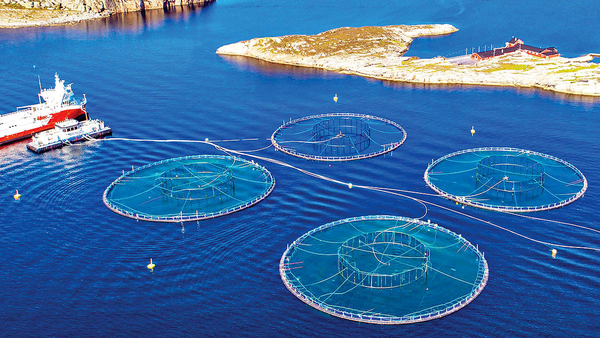
Rostampour noted that the necessary infrastructure has been provided to produce more than 60,000 tons of aquatic products at sea, and planning is underway to supply the fingerlings required for these projects. At the same time, shrimp farming along the southern coasts, fish farming in the northern sea, and the development of sturgeon farming are being seriously pursued, given the ban on sturgeon fishing in the Caspian Sea.
He said that last year, 6,000 tons of sturgeon meat and 30 tons of farmed caviar were produced, half of which was exported to global markets. Therefore, fishermen’s cooperation in protecting the sea, monitoring catches, and implementing stock-restoration programs has helped increase catches in the Caspian Sea, Persian Gulf, and Gulf of Oman.
— IRNA