

Who Benefits Most from the Surge in Oil Prices?…
✍️ Amirhossein Khodaei, Researcher
To understand which country benefits from higher oil prices, we must first know which country produces the largest amount of oil and petroleum products in the world.
According to the U.S. Energy Information Administration, the United States is the world’s largest crude oil producer. U.S. crude oil production reached about 13.5 million barrels per day in 2025, accounting for roughly one-sixth of global oil production. This figure is expected to approach 14 million barrels per day in 2026.
But crude oil production is only part of the story. The real value lies in refining oil and converting it into gasoline, diesel and jet fuel. The United States has refining capacity of around 18 million barrels per day. When the global market comes under pressure, profit margins at U.S. refineries reach unprecedented levels. In the second quarter of 2026 alone, three major U.S. refining companies—Marathon, Valero and Phillips 66—collectively earned about $12.5 billion in profits.
The next link in the chain is the petrochemical industry. The United States is the world’s largest producer of petrochemical products. Companies such as ExxonMobil and Dow Chemical are among the world’s largest producers of chemicals and plastics. They buy or extract crude oil, refine it, and then turn it into products worth several times more than the crude oil itself.
Finally, there is the point that connects everything together. Oil and petroleum products are traded globally mainly in U.S. dollars. Around 80 percent of global oil transactions are conducted in dollars. This means that every barrel of oil bought and sold anywhere in the world must pass through U.S. banking channels, increasing demand for the dollar.
Given this production and trading structure, is a rise in oil prices beneficial or harmful to the U.S. government?
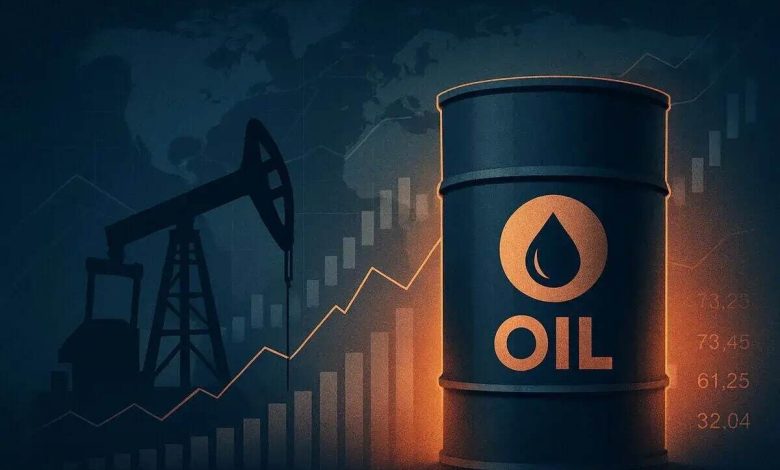
When oil prices rise, the U.S. government benefits through several channels at the same time. American oil producers, whose breakeven point is between $63 and $69, make enormous profits when prices rise above $80 and now reach $100. U.S. refineries operate at close to full capacity and their profit margins increase several times over. Petrochemical plants gain access to cheaper feedstock and larger global markets.
On the other hand, when political tensions disrupt oil supplies from countries such as Russia or Iran, export markets are left open and the United States fills the gap. U.S. oil exports have risen from around 6.5 million barrels per day in 2025 to more than 10 million barrels per day.
But the most important part of the story is this: when oil prices rise, global demand for the dollar also increases because oil is traded in dollars. Every additional dollar paid for oil must pass through the U.S. banking system. This means the United States can print dollars without physical backing while the world is forced to demand them in order to purchase energy.
The United States has around $40 trillion in debt, and this debt has increased by approximately $2.5 trillion over one year. Under such circumstances, stronger global demand for the dollar allows the United States to manage its enormous debt without a collapse in the value of its currency. Put simply, every global oil crisis becomes a financial opportunity for the U.S. Treasury.
If we accept that the current structure of the global energy market works in America’s favor, we must look for ways to change this structure. There are two main approaches.
The first is to gradually move away from the dollar in oil transactions. This process has already begun. The BRICS group, which includes 15 countries representing 40 percent of the world’s population and 30 percent of global GDP, is working on an alternative financial system. In the first half of 2025, the volume of trade among BRICS countries using their national currencies reached $5.6 trillion, a 45 percent increase from the previous year. In 2025, the 50-year oil-for-dollar agreement between the United States and Saudi Arabia ended without renewal, and Saudi Arabia announced that it was ready to use multiple currencies in oil transactions. The yuan’s share of Saudi oil transactions with China has exceeded 45 percent. The Shanghai Cooperation Organization has also announced that most energy transactions among its members are conducted in national currencies. This means countries can buy and sell oil without needing to pass through the U.S. banking system.
The second approach is to establish strategic alliances among countries that share common interests in changing the existing system. Existing alliances such as OPEC and OPEC+ primarily benefit crude oil producers, rather than countries seeking to control the entire oil and petrochemical value chain. Countries that possess oil, refineries and petrochemical industries all have an interest in forming alliances with one another. Iran, Russia, China, Yemen, Iraq, Saudi Arabia, the UAE, India and other independent countries could form a joint value chain. From oil extraction to refining, petrochemical production and the sale of final products, everything could be carried out through a network of joint cooperation. If this happens, the United States would no longer be the sole dominant player across all links of this chain.
The important point is that these changes alone are not sufficient. As long as banks, insurance companies and international payment systems remain largely controlled by the United States and its allies, any effort toward de-dollarization will face serious obstacles. Countries that sell their oil in yuan or rubles still depend on the dollar-based system for investment, insurance and transportation. These chains of dependence must gradually be broken.
But if joint refineries are built, joint development banks are established, a payment system independent of SWIFT is created, and joint investment funds are established to complete the value chain in these countries, then it may be possible for the profits from higher oil prices to flow into the hands of the nations that own these resources rather than into the U.S. Treasury.
Final Summary
The United States is the only country in the world that is simultaneously the largest oil producer, largest refiner, largest petrochemical producer, and issuer of the main currency used in global oil transactions. This unique combination means that every crisis threatening global oil supplies can become an economic opportunity for the United States. But this situation is not permanent. De-dollarizing oil transactions and forming strategic alliances among independent countries are two paths that could gradually change this structure.
With more than $40 trillion in debt, the United States is more dependent than ever on global demand for the dollar. Any blow to this dependence is a blow to America’s ability to manage its debt. This means that countries sharing a common adversary, if they unite and build an alternative financial and trading system, can reclaim their share of this enormous market.