


From “Local Manufacturing” to “Technology Exports”: The Missing Link in Iran’s Industrial Policy
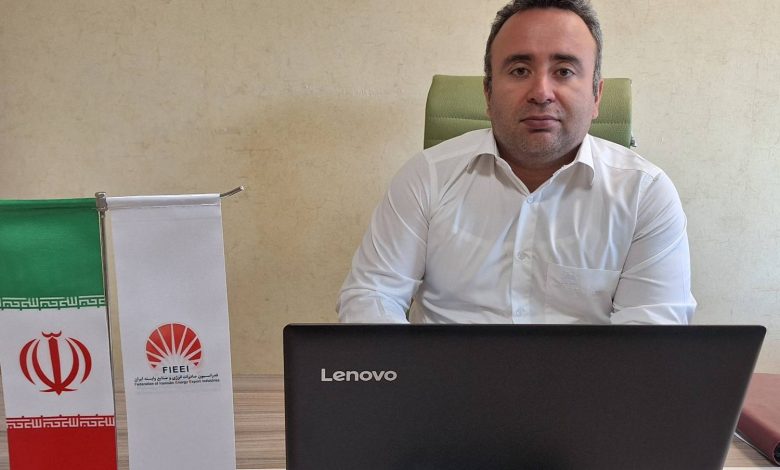
✍️ Morteza Mokhlesabadi Farahani; Member of the Board of Directors of the Federation of Energy and Related Industries Exporters
The policy of supporting “local manufacturing” has played an important role in reducing dependence on imports, preserving foreign exchange resources, and developing domestic production and technological capabilities over the years. However, today, merely producing or assembling a product domestically can no longer be considered a sufficient criterion for assessing the country’s industrial capabilities.
The main issue is not supporting the “domestic product”; rather, it is supporting “domestic technology.”
There is a fundamental difference between an importer, an assembler, a systems integrator, a manufacturer with substantial local content, and a technology-owning company. Policymaking can lead to genuine industrial development only when it recognizes these differences and structures support based on value creation, technology ownership, R&D, domestic design, local manufacturing depth, specialized human resources, and export capabilities.
From this perspective, it is necessary to define the concept of a “genuine manufacturer” precisely and establish a multi-level ranking system for participants across the supply chain. This ranking should not merely serve administrative purposes; it should form the basis for scoring in tenders, accreditation, financial incentives, and export support.
Local Manufacturing Without a Roadmap Is Not Enough
One of the major weaknesses of the local manufacturing policy has been its focus on “what we can manufacture” rather than “which technologies are essential for the country’s future.”
Developing a product merely in response to temporary demand does not necessarily create a competitive advantage. Therefore, Iran needs to connect its higher-level policy documents, industrial roadmap, technology roadmap, priority technologies, product development, markets, and exports.
Nor should it be assumed that all technologies must be developed from scratch domestically. Depending on strategic importance, complexity, development costs, technological gaps, and potential markets, domestic development may be the best option for one technology, technology transfer for another, and joint cooperation or investment for another.
Support Must Correspond to Technological Depth
If a company that has invested for years in R&D, design, manufacturing, testing, and product development does not perceive a meaningful difference from a mere assembler, there will be little incentive to deepen its technological capabilities.
Therefore, incentives should be tiered: the greater the level of technology ownership, R&D, domestic design, manufacturing depth, and customization capability, the greater the score and support should be.
At the same time, the proliferation of vendor lists and repeated evaluation processes across different organizations imposes significant costs and delays on manufacturers. Establishing a unified accreditation system could prevent such duplication.
The same issue applies to laboratories. If a product has been tested by an accredited laboratory, its results should, as far as possible, be accepted in other projects as well. Establishing a network of reference laboratories and mutual recognition of certificates can shorten the path for domestic products to reach the market.
Cybersecurity: A National Necessity, Not an Obstacle to Production
With the digitalization of electricity, energy, oil and gas, water, and transportation infrastructure, cybersecurity of industrial equipment has become a fundamental requirement. However, cybersecurity regulation in OT environments must be designed according to the specific characteristics of industrial sectors.
OT environments differ significantly from IT environments, including requirements for continuous operation, real-time performance, long equipment lifecycles, limited opportunities for updates, and the presence of legacy systems.
On the other hand, the absence of appropriate Protection Profiles for certain categories of industrial equipment can make the evaluation process complex, costly, and unpredictable for manufacturers.
The solution is not to eliminate security requirements, but to make regulation smarter: develop appropriate Protection Profiles, expand specialized OT laboratories, clarify evaluation procedures, recognize valid certificates, and establish a clear pathway for new products.
The key principle is that cybersecurity standards must apply equally to domestic and foreign products. Iranian products should not be exempt from assessment simply because they are domestically produced, while foreign products should not enter the market solely on the basis of a foreign certificate without being assessed against national requirements.
Specifications Should Not Become a Tool for Market Engineering
Every technical or security requirement in a tender can affect the competitive environment. Therefore, specifications should define the project’s actual technical and security requirements rather than indirectly favoring a particular brand or a limited group of suppliers.
Independent oversight and auditing of tender conditions, especially in sensitive projects, can help prevent unnecessary exclusion of competitors and preserve competition.
Manufacturers should also have access to an independent, confidential, and secure mechanism for challenging evaluation and tender procedures, so that filing a complaint does not itself jeopardize future commercial opportunities.
The Ultimate Test: Technology Exports
If the objective of industrial policy is merely import substitution, its achievements will remain limited. The ultimate goal should be to transform production capabilities into exportable technology.
A company may have the technical capacity to compete in regional markets but lose opportunities in foreign projects due to a lack of guarantees, buyer-credit insurance, project financing, or political and commercial risk coverage.
Therefore, support for technology exports should include export guarantees, export insurance, buyer credit, project financing, political and commercial risk coverage, and sovereign guarantees for selected projects.
The competition between an Iranian company and a foreign competitor in the global market is not merely a competition between two products; it is a competition between two support ecosystems.
The Private Sector: The Forgotten Market of Local Manufacturing
A significant portion of the industrial equipment market is controlled by private companies—entities that are not directly required to purchase locally manufactured products and may continue to prefer foreign brands for traditional reasons.
Therefore, support for local manufacturing should not be limited to government and state-owned projects. The private-sector market should become the main arena for testing the competitiveness of Iranian technology.
Conclusion
The local manufacturing policy must move beyond the stage of “manufacturing whatever we can” toward “selecting strategic technologies, developing competitive products, creating markets, and exporting technology.”
The success of this policy should not be measured solely by the reduction in imports. Increased technology ownership, R&D growth, greater manufacturing depth, development of new products, higher productivity, and growth in technology exports should become the key indicators for evaluating industrial policy.
Ultimately, a complete chain must be established:
Industrial roadmap → Technology roadmap → Technology development → Product → Testing & standards → Cybersecurity → Manufacturing → Domestic market → Economies of scale → International competition → Exports
If any link in this chain is weak, even a capable technology may fail to become a commercial product and ultimately an export.
Real support for local manufacturing means supporting the country’s ability to create technology, manufacture products, develop markets, compete, and ultimately export Iranian technology.
The ultimate goal should not simply be “manufacturing domestically”; it should be identifying needs, selecting technologies, developing products, manufacturing, competing, and exporting Iranian technology.