

The Transit War: Trucks and Tractors, Iran’s Unassuming Weapon in the Battle for Routes
✍️ Amirhossein Khodaei — Researcher
Logistics War
Introduction: A War Fought Over Routes
In today’s world, an important part of a country’s national power lies in its ability to move goods, energy, capital, and people. A country that can control global trade routes does not merely collect transit fees; it places itself at the heart of a chain of economic, industrial, financial, insurance, warehousing, repair, and value-added activities. This is precisely what is referred to as logistics warfare.
Iran stands at a unique geographical crossroads. On one side, it connects Central Asia and China to the Persian Gulf, the Gulf of Oman, and the Indian Ocean. On another axis, it connects the Caucasus and Russia to the warm waters of the south. On a third axis, it links Turkey and Europe with Central Asia, Afghanistan, India, and Pakistan.
The key question is not whether Iran has a transit position or not. The real question is how much of this position it has actually turned into an operational advantage.
Under the doctrine of logistics warfare, transit is no longer a marginal economic activity; it is a strategic weapon and an instrument of national survival against economic blockades and crippling sanctions. A country capable of controlling the routes through which goods, energy, and capital move effectively holds the economic breathing points of its rivals in its hands. At the heart of this battle stand trucks and tractor units—unassuming weapons that receive little attention, but without which no transit chain can be completed.
Trucks and Tractor Units: The Irreplaceable Link
The biggest mistake in analyzing transit is reducing it to the movement of a truck from one border to another. A transit shipment moved by truck alone can generate demand for dozens of economic activities: from the truck, tractor unit, and trailer itself to repair shops, gas stations, insurance services, banking, and financing. From customs offices, transport companies, freight forwarders, and logistics firms to information technology, satellite tracking, and security. From restaurants, hotels, and driver services to spare-parts manufacturing, truck production, and maintenance and repair services.
The result is that every ton of transit cargo moved by truck can create value within the domestic economy several times over. This is what turns the truck from a simple means of transportation into a multilayered industry.
The truck is the most flexible means of transportation. It can pick up cargo directly from a factory, cross a border with no rail infrastructure, travel to an industrial town without a dry port, and ultimately deliver the goods to their destination. This flexibility has made the truck the final link in the transit chain and, on many routes, its principal link. Even when goods are transported by ship, train, or aircraft, it is the truck that moves them from the port to the warehouse, from the station to the factory, and from the airport to the final destination. The truck is the connecting link between all modes of transportation.
Tractor Units: The Beating Heart of the Transit Fleet
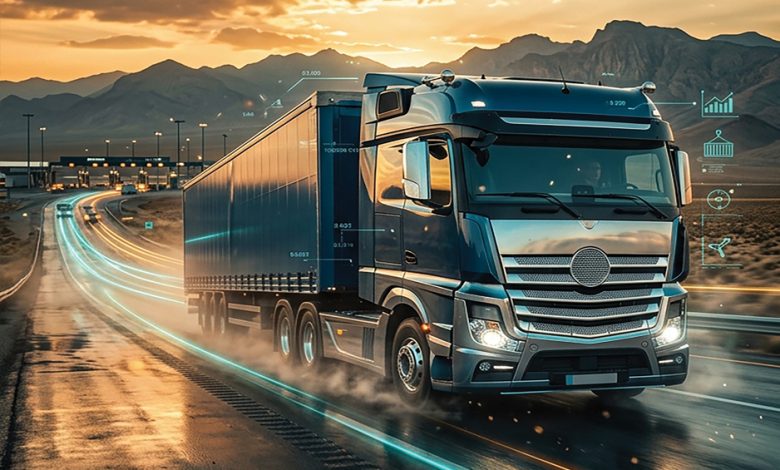
Among different types of trucks, tractor units occupy a special position. The tractor unit is the most expensive, technically advanced, and strategic component of a transit fleet. A modern international tractor unit costs between $150,000 and $300,000, while a standard trailer is worth around $30,000 to $50,000. This means that more than 70 percent of the value of a transit fleet is concentrated in tractor units.
The tractor unit is the driving force of the transportation economy. Fuel consumption, depreciation, maintenance, and driver income all depend on the performance of the tractor unit. Its characteristics in terms of emissions, permissible weight, and safety equipment determine whether Iran can access European markets and countries with high standards. Outdated tractor units can increase fuel costs by up to 40 percent, reducing the competitiveness of Iranian transit compared with Turkey and the UAE.
Transit tractor units are generally equipped with sleeper cabins so drivers can rest during long journeys. Their engine power is usually between 400 and 600 horsepower, and they are equipped with ABS, EBS, and stability-control systems. Euro emissions standards determine restrictions on entry into different countries.
In Iran, the active fleet includes a combination of Volvo, Scania, Mercedes-Benz, Renault, MAN, DAF, and Iveco tractor units, but a large portion of them are outdated, and the average age of the country’s transit fleet is more than 25 years.
Some tractor units are designed for specific applications: refrigerated tractor units for perishable goods, container tractor units for transporting containers, heavy-duty tractor units for oversized loads, and dual-fuel tractor units to reduce fuel costs. Choosing the right fleet combination according to the type of cargo and route is one of the key factors for success in transit.