

Section Six: Untold Stories and Behind-the-Scenes Documents (Part Three)
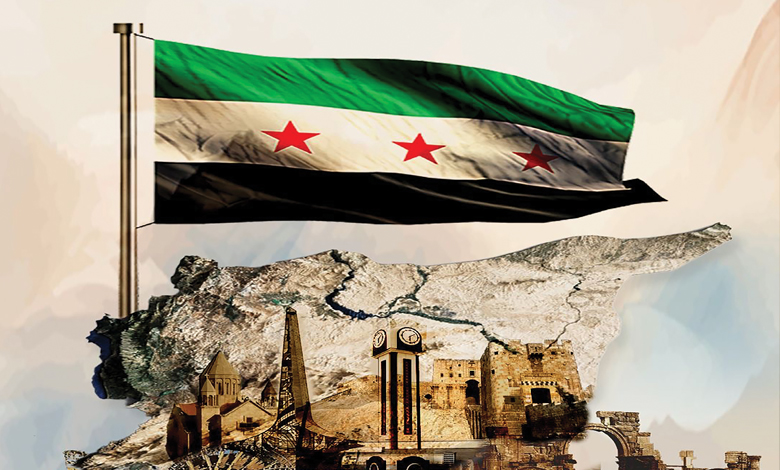
The Role of Martyr Commander Qassem Soleimani in Syria: Details and In-Depth Analysis
Martyr Commander Haj Qassem Soleimani, the former commander of the Quds Force of Iran’s Islamic Revolutionary Guard Corps (IRGC), played a central and multi-dimensional role in the developments of the Syrian civil war. His activities in Syria, which intensified with the outbreak of the Syrian crisis in 2011, included military coordination, covert diplomacy, organization of paramilitary forces, and the strengthening of the Axis of Resistance against armed opposition groups and ISIS. This section examines the details of Martyr Soleimani’s role in Syria, focusing on strategic, operational, and political dimensions.
1. Background and Entry into the Syrian Crisis
The Syrian civil war began in 2011 as popular protests against the government of Bashar al-Assad, but it quickly evolved into a complex conflict involving regional and international actors. For Iran, preserving the Assad government as one of the main pillars of the “Axis of Resistance” (comprising Iran, Lebanon’s Hezbollah, and the Syrian government) was of vital importance. Qassem Soleimani, as the architect of Iran’s regional strategy, assumed responsibility from the outset for directing Iran’s policies in Syria.
According to published reports, Soleimani became actively involved in Syria from 2012 onward. He acted not only as a military commander but also as a political strategist and diplomat. His primary objective was to prevent the collapse of the Assad government in the face of armed opposition groups such as the Free Syrian Army, and later extremist organizations including Jabhat al-Nusra and ISIS. Soleimani pursued this role through coordination with Iranian military forces, Lebanon’s Hezbollah, Iraqi militias, and even external actors such as Russia.
2. Soleimani’s Military Role in Syria
Organization of Paramilitary Forces and the Axis of Resistance
One of Soleimani’s most significant actions in Syria was the organization and strengthening of Iran-aligned paramilitary forces. By establishing a network of armed groups—including Iranian forces, Lebanon’s Hezbollah, and Shiite militias from Iraq and Afghanistan (such as the Fatemiyoun Division)—he helped create a powerful front against Assad’s opponents. These forces, operating under the direct supervision of the Quds Force, played key roles in major operations such as the Battle of Aleppo (2016), the liberation of Deir ez-Zor (2017), and al-Bukamal (2017).
Martyr Soleimani was personally involved in the planning and execution of military operations. For instance, during the Battle of Aleppo—one of the turning points of the Syrian war—he directed the strategy to besiege the city in coordination with Hezbollah forces and the Syrian Arab Army. This operation led to the recapture of Aleppo from opposition forces and marked a decisive moment in consolidating the Assad government’s control over strategic areas. Limited images released at the time showed Soleimani alongside Hezbollah fighters and Syrian military commanders, underscoring his direct presence on the battlefield.
Cooperation with Russia
One of the most notable aspects of Soleimani’s role in Syria was his secret negotiations with Russian officials to secure Moscow’s military support. In the summer of 2015, Soleimani traveled to Moscow and met with President Vladimir Putin and other senior Russian officials. During these meetings, he presented operational plans and field intelligence, persuading Russian leaders that direct military intervention in Syria would serve the shared interests of Iran and Russia. These efforts culminated in the official entry of Russian air and ground forces into the Syrian conflict in September 2015, a turning point that significantly strengthened Assad’s position against his adversaries.
Soleimani also played a key role in coordinating joint operations among Iranian, Syrian, and Russian forces. For example, during the liberation of Palmyra (Tadmur) in 2016, forces under his command operated alongside Russian forces and the Syrian army. This cooperation—combining Russian air support with ground operations by Iran-aligned forces—demonstrated Soleimani’s ability to manage complex military coalitions effectively.
Fight Against ISIS
Martyr Soleimani played a decisive role in combating ISIS in Syria. By organizing Iraqi Popular Mobilization Forces and the Fatemiyoun Division, he focused operations on Syria’s eastern fronts, particularly areas near the Iraqi border such as Deir ez-Zor and al-Bukamal. In November 2017, Soleimani sent a letter to the Leader of the Islamic Revolution announcing the end of ISIS’s territorial control in Syria. This declaration followed the liberation of al-Bukamal, the group’s last major stronghold in eastern Syria.
Martyr Soleimani was personally present during this operation, and images released at the time showed him alongside his forces, directing the battle from the front lines—highlighting his hands-on leadership and direct involvement in critical military operations.