

Collection of 11.5 Million Cubic Meters of Flare Gas
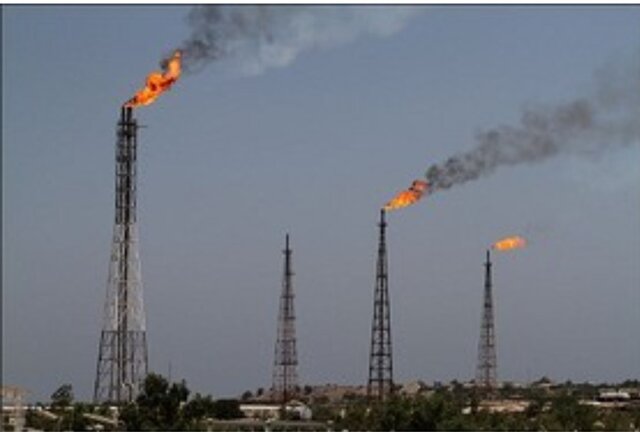
According to the Sedaye Sama News Agency, years of flaring gas in the country’s oil-producing regions have not only caused environmental pollution but have also wasted valuable energy resources. In recent years, the need to collect and utilize these gases has therefore received increasing attention. In this regard, the Ministry of Oil is seriously pursuing the collection of flare gas by developing infrastructure and implementing new projects, with the aim of reducing energy losses, helping address the gas imbalance, and mitigating environmental impacts.
The flaring of associated gas at the country’s oil fields over the past decades has caused energy waste as well as economic and environmental consequences, and has contributed to increased greenhouse-gas emissions. For this reason, over the past one to two years, the Ministry of Oil has sought to reduce gas flaring and increase the capacity to collect flare gas.
In this process, the Ministry of Oil’s long-term projects focus on establishing NGL units and upgrading gas refineries. These projects could significantly increase the capacity to collect flare gas.
Flare Gas Collection Accelerates
Before the establishment of the 14th administration, around 7 million cubic meters of flare gas per day was collected in the regions operated by the National Iranian South Oil Company, the Central Oil Fields Company of Iran, and Arvand Oil and Gas. Since the 14th administration took office and new flare-gas collection units became operational, however, this figure has risen to more than 16 million cubic meters per day.
Mohsen Paknejad, Minister of Oil, recently described the collection of flare gas as one of the priorities emphasized by the president in reviewing the oil industry’s two-year performance. He said follow-ups on the issue were so persistent that in almost every phone conversation with the president—even when another subject was being discussed—the president would ask at the end of the call about the mechanism for implementing flare-gas collection projects.
He added that the president had correctly recognized the importance of these projects and pursued them insistently, stressing several times in various meetings: “If there is any problem in this regard, point it out and I will solve it,” so that possible lack of coordination among government bodies would not delay implementation.
According to Paknejad, as a result of the president’s continued follow-up, around 11.5 million cubic meters per day of flare gas has been collected through various projects since the beginning of the 14th administration. This project is considered a clear example of preventing the waste of the country’s energy and resources and should be pursued seriously until completion.
57 Flares to Be Shut Down Through New Contracts
Collecting flare gas is not technically a simple project, because the gas must be collected at the production site, its pressure increased, transported through pipelines, and processed at suitable facilities. Ultimately, there must also be a market or sales opportunity for the gas and its resulting products.
To accelerate implementation, the National Iranian Oil Company has signed 23 contracts for the collection of associated petroleum gas. The implementation of these contracts will result in the shutdown of 57 flares and generate more than $800 million in annual revenue for the country.
Under a resolution approved early last year, associated gas and flare gas belonging to the National Iranian Oil Company were offered to private and non-governmental sectors for selection and competition at a base rate of zero.
The director of investment and business development at the National Iranian Oil Company also described the permanent adoption of the resolution on collecting associated gas as one of the recent measures taken by the company’s board of directors. He believes that making the resolution permanent is a positive step toward attracting private and non-governmental resources and continuing associated-gas collection contracts.
Despite the progress made, flare shutdown remains one of the major issues facing the oil industry, and the implementation of new contracts is part of a broader plan to reduce gas flaring. According to the plan announced by the Ministry of Oil, the goal is to collect around 90 percent of flare gas by the end of 1406.
Within this framework, new contracts in the South Oil-producing Regions are also part of the effort to reduce gas flaring.
Experts emphasize that collecting flare gas is one of the most rational and low-risk ways to improve the energy sector, as it can simultaneously increase efficiency and revenue, reduce pollution, and improve the country’s environmental standing. In other words, while releasing flare gas into the atmosphere causes pollution, these gases themselves are a valuable resource, and collecting and utilizing them can contribute to the country’s economy.
/ ISNA