

More Than 1.1 Million People Received Arbaeen Foreign Currency but Did Not Leave the Country
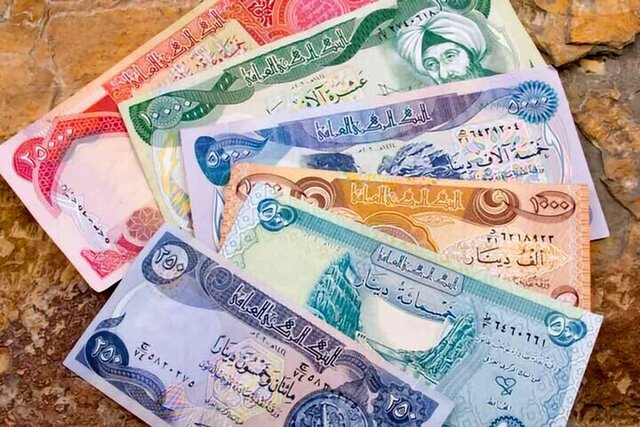
According to Sedaye Sama News, as the Arbaeen pilgrimage approaches each year, providing the foreign currency needed by pilgrims becomes one of the country’s key monetary policy issues. In recent years, the Central Bank has offered pilgrimage currency under special conditions to reduce travel costs. However, the method of allocating this currency and its impact on the foreign exchange market have remained subjects of debate among policymakers and economists, with some statistics indicating challenges in implementing this policy.
According to figures released by the Central Bank, around one million people received Arbaeen foreign currency in 2023, while more than 1.6 million people received it in 2024. Estimates indicate that approximately 30 percent of those who received the currency ultimately did not leave the country—about 300,000 people in 2023 and around 500,000 in 2024.
Based on these estimates, the amount of currency allocated to these individuals exceeded 160 billion Iraqi dinars, equivalent to more than 100 million US dollars.
Economic experts consider the gap between the official exchange rate and the market exchange rate to be one of the main reasons behind this situation. Accordingly, the Central Bank introduced changes to the procedures for supplying Arbaeen pilgrimage currency for 2026.
Under the new directive, unlike previous years, Arbaeen foreign currency will be supplied from domestic resources within the banking network supervised by the Central Bank, including banks and exchange offices, and the agreed exchange rate will serve as the basis for sales.
Source: ISNA